“How much do you need for a test?”
That’s the question every affiliate asks when they want to do things right. And the answer they usually get is: “Well, $500–1,000 minimum to get statistically significant data.”
After that, the affiliate either spends $1,000 and wastes it on the wrong test. Or doesn’t test at all — runs one creative until it burns out, then goes looking for a new offer.
Both options are money down the drain.
The truth is, you can test with a budget of $5–10 per ad set. Not $500. Not $100. Five to ten dollars. But for that, you need to understand three things:
- What exactly you’re testing (not everything at once)
- Which metrics to watch at small volumes (not CPA)
- When to kill and when to scale (not after a week)
Here’s a concrete method. No probability theory. Just numbers and timing.
Principle #1: Test One Variable at a Time
Why It Matters
You launch two creatives with different hooks, different pre-landers, targeting different audiences, at different times. Creative A gave CPL $4, Creative B — $8. Conclusion: “A is better.” But what exactly is better? The hook? The pre-lander? The audience? The time of day?
You don’t know. And you won’t find out. Because you changed 4 variables at once.
| What we test | What we keep fixed |
|---|---|
| Hook (first 1–3 sec of video) | Same pre-lander, audience, budget, time |
| Pre-lander | Same creative, audience, budget, time |
| Audience | Same creative, pre-lander, budget, time |
| Format (Reels vs Stories) | Same creative, pre-lander, audience, budget |
Testing Order (from highest impact to lowest)
- Hook / creative — biggest impact on CTR
- Pre-lander — biggest impact on CR
- Audience / geo — impact on CPM and lead quality
- Format / placement — fine-tuning
Don’t skip ahead. Not until a working hook is found.

Principle #2: Small Budgets Require Different Metrics
Forget CPA at the Testing Stage
CPA (cost per acquisition) is a final metric. To be reliable, it requires 30–50 conversions. At CPL $5 — that’s $150–250 for just one variant. For two variants — $300–500. That’s not a “budget test.”
What to Watch Instead of CPA
| Metric | What it shows | Good benchmark (nutra) | Where to find it |
|---|---|---|---|
| Hook Rate | % of people who watched the first 3 sec | >25% | Ads Manager → Video Engagement |
| CTR (all) | % of people who clicked on anything | >2% | Ads Manager → Performance |
| CTR (link) | % of clicks specifically on the link | >1% | Ads Manager → Performance |
| CPC | Cost per click | <$0.30 | Ads Manager → Performance |
| ThruPlay Rate | % who watched 15+ sec of the video | >15% | Ads Manager → Video Engagement |
Decision Hierarchy
- Hook Rate < 15% — hook is dead. Kill it. Don’t spend more.
- Hook Rate > 25% — hook is grabbing attention. Keep testing.
- CTR (link) < 0.5% — creative isn’t driving action. Change CTA or delivery.
- CTR (link) > 1.5% — creative works. Test the pre-lander.
- CPC > $0.50 — audience is expensive or creative is weak. Check targeting.
- CPC < $0.20 — excellent. Scale carefully.
The Main Rule
At the $5–10 test stage, you’re not answering “how much does a lead cost?” — you’re answering “does the creative hook people or not?”

Principle #3: Test Structure — CBO vs ABO
For Tests — ABO Only (Ad Set Budget Optimization)
With CBO (Campaign Budget), Facebook decides who gets the budget. At the testing stage, this is deadly: it will dump everything into one ad set in the first 2 hours and “decide” the rest don’t work.
Test Campaign Structure
- Campaign: TEST_[offer]_[date]
- Ad Set 1: Creative A — $5–10/day
- Ad Set 2: Creative B — $5–10/day
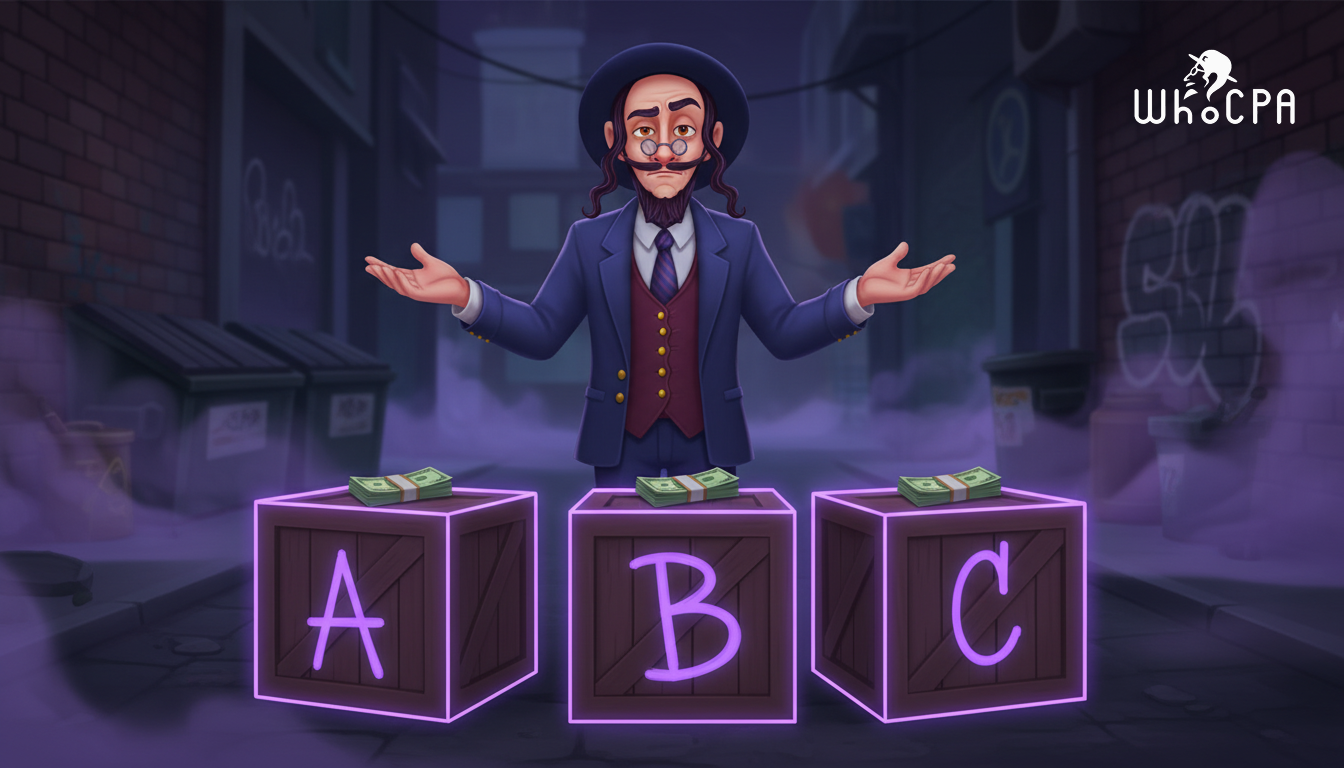
- Ad Set 3: Creative C — $5–10/day
All ad sets: same audience, same pre-lander, same geo, same placement, optimization: Landing Page Views (not Conversions!), duration: 24–48 hours.
Why Landing Page Views and Not Conversions
With a $5–10 budget you won’t get enough conversions to optimize. Facebook will “search” for converters, won’t find them, and will waste the budget. Landing Page Views gives a steady click flow — you see CTR and Hook Rate — and you make decisions.
Switch to Conversions after you’ve found a working creative and raised the budget to $20–30/ad set.
Principle #4: Kill Rules — When to Kill
The 24-Hour Rule
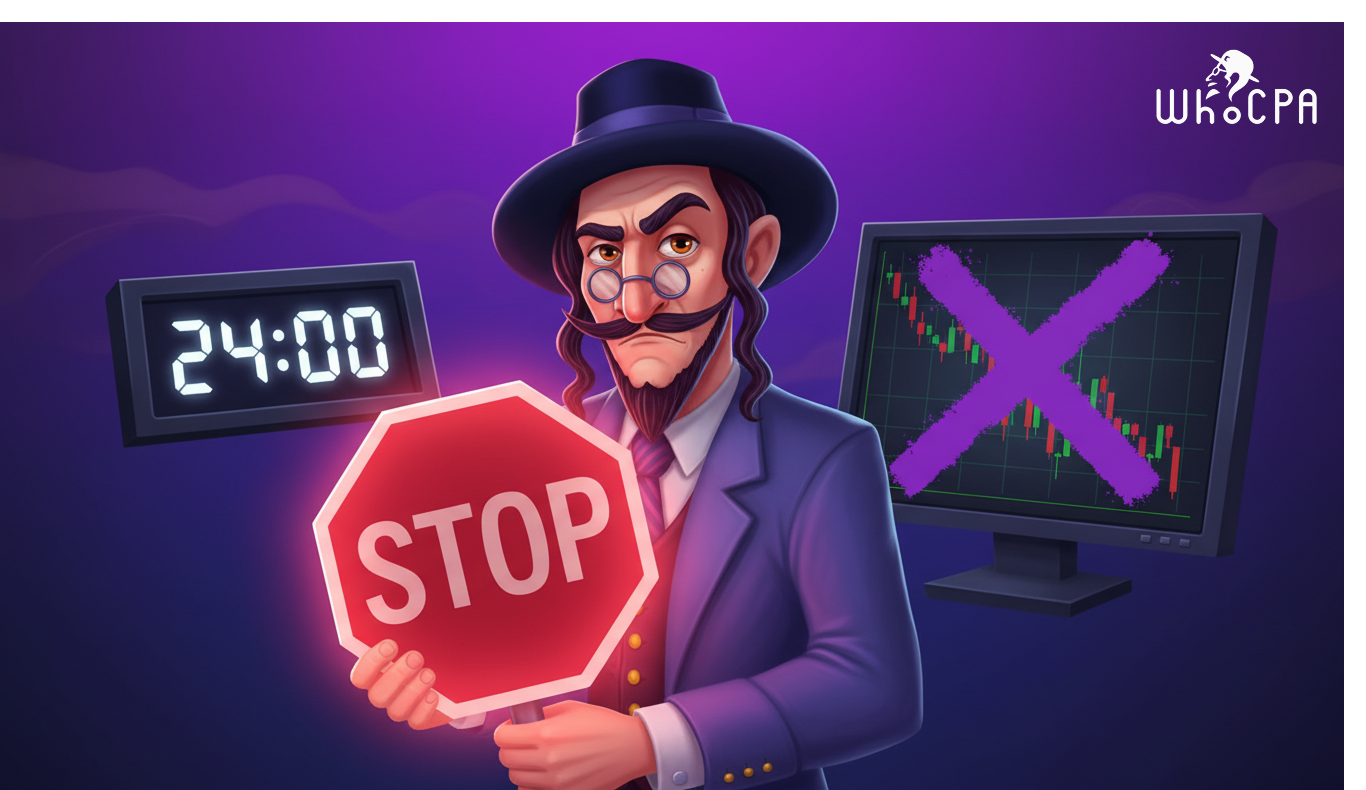
A test runs for exactly 24 hours. Not 6 hours (“you can already tell”). Not 5 days (“maybe it’ll warm up”). One full day — that’s one complete cycle of audience behavior (morning, afternoon, evening, night).
Kill Matrix
| After 24h | Hook Rate | CTR (link) | Decision |
|---|---|---|---|
| Variant A | <15% | <0.5% | Kill |
| Variant B | 20% | 0.8% | Borderline. Give another 24h |
| Variant C | 30% | 1.5% | Winner. Scale it |
Hard Kill Signals (kill immediately, don’t wait 24h)
- Hook Rate < 10% after 1,000 impressions — hook is dead, enough data
- 0 clicks after 500 impressions — something is fundamentally wrong
What NOT to Do
- Don’t kill before 500 impressions — too little data
- Don’t “give another chance” to creatives with Hook Rate <15% — they won’t warm up
- Don’t change creative/audience/budget mid-test — you reset the learning
- Don’t test on Friday evening — weekends skew the data
Principle #5: Scaling the Winner
Step 1: Confirmation (Day 2–3)
A winner has been found. But so far it’s a winner at $5–10. Now:
- Raise the budget to $20–30/day
- Switch optimization to Conversions (if the pixel has data)
- Now look at CPL / CPA over 48 hours
Step 2: Vertical Scaling (Day 7+)
Ad sets delivering a stable CPL for 3+ days in a row — raise the budget by 20–30% every 2 days. No more. Sudden budget jumps break pixel learning.
Conclusion
A/B testing is not a privilege reserved for those with $1,000 to spend on tests. It’s a basic skill that can (and should) be practiced for $5 at a time.
The difference between an affiliate who bleeds money and one who makes money isn’t the budget. It’s that the second one knows: $5 spent on the right test saves $500 that would have been wasted on the wrong creative.
Test cheap. Kill fast. Scale slow. And keep a spreadsheet. Always keep a spreadsheet.