Two years ago, AI video was a meme - wonky fingers, melting faces, text from a parallel universe. Today, AI-generated creatives are running in real ad accounts and bringing in leads at a lower cost than traditional production.
But between "look at this cool clip" and "this is running in an adset at $500/day" - there's a massive gap. In this article - no hype, no fluff - we'll break down which tools nutra affiliates actually use, where AI saves thousands of dollars, and where it burns your budget to the ground.
Why AI Video in Nutra at All
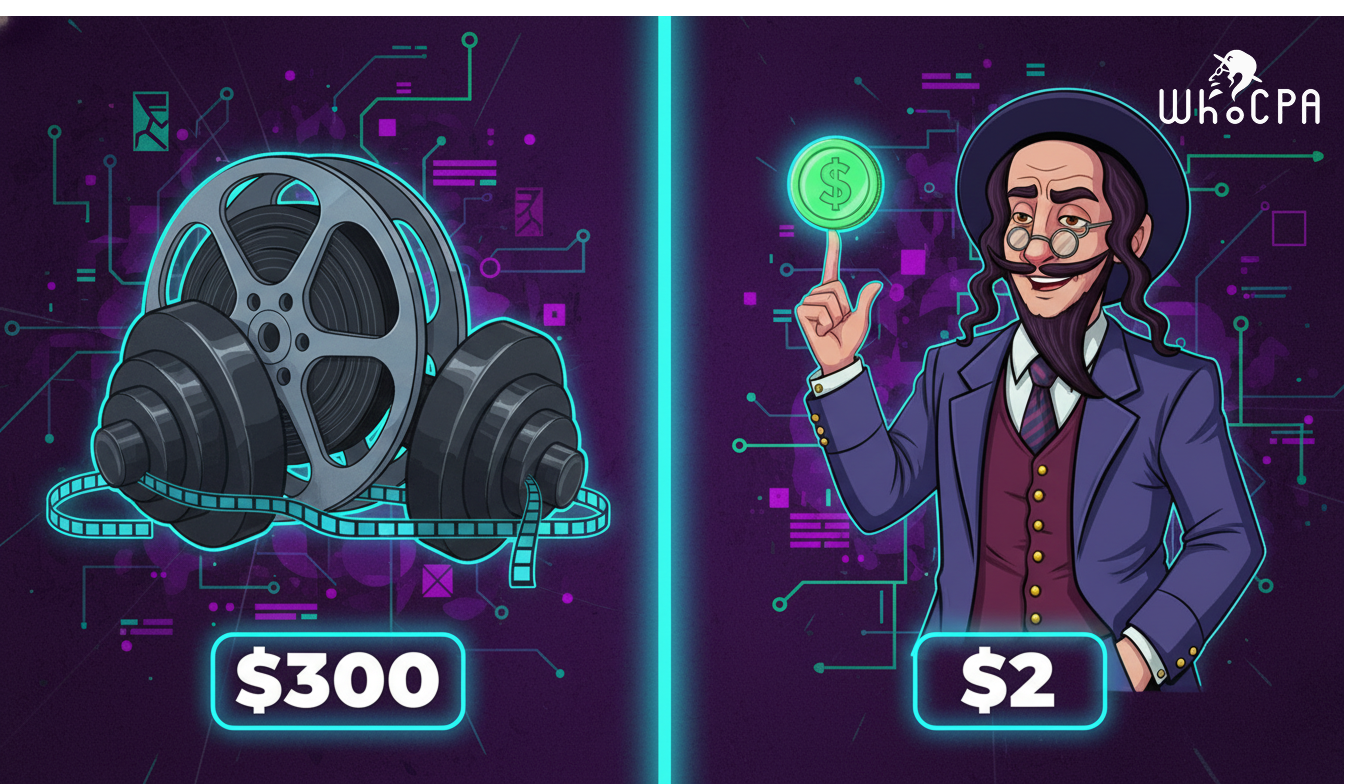
Classic creative production for nutra looks like this:
- Find an actor / UGC creator - $50-300 per video
- Wait 2-5 days
- Get something that might not pass moderation
- Repeat
When you're testing 10-20 creatives per week, this turns into a conveyor belt that eats time and money. AI changes the economics:
The main advantage is not cost - it's iteration speed. You can test 15 angles in a day instead of three in a week.
The Tool Landscape: What's Available in 2026
Video Generation
Veo 3.1 (Google) - the primary working tool. Generates clips up to 8 seconds in portrait (9:16). It can:
- Text → video with dialogue (character speaks in the target language)
- Image → video (bring a photo to life)
- Native audio - sound, ambience, and dialogue generated alongside the video
- Vertical format (9:16) natively
Especially strong for physical effects: a drop of blood on a test strip, tears on a face, cream absorbing into skin - Veo does this far more realistically than competitors. Available via Gemini API and Google AI Studio. Model lineup: Veo 3.1 Lite (budget, ~$0.05/sec), Veo 3.1 Fast (balanced), Veo 3.1 Pro (maximum quality).
Kling, Runway, Pika - exist, but less relevant for nutra. Kling is good for Asian faces (useful for SEA), Runway - for stylization.
Image Generation
Gemini Image - fast generation of portraits, product photos, "before/after".
GPT Image - alternative with strong text-on-image capabilities.
Voiceover (TTS)
ElevenLabs - the gold standard for LATAM. Voice cloning from a 30-second sample.
MiniMax - great option for SEA. Thai, Indonesian - sounds natural.
Avatars (Talking Head)
InfiniteTalk - photo + audio → talking head with lip sync. Paid ($0.03/sec), but indispensable for "doctor explains" formats.

What Actually Works: 4 Formats with ROI
1. AI Hook + Real Content
Formula: AI-generated first 3-5 seconds (hook) + real footage / UGC.
This is the safest and most effective format. AI does what it does best - generates a gripping, provocative hook you'd never shoot with a real actor (because of moderation, because it's expensive, because it's awkward to ask an actor to fake shock).
Example for diabetes nutra:
- Hook (AI, 5 sec): A doctor stares into the camera with a shocked expression, holding lab results
- Body (real, 20 sec): UGC testimonial, product shots, CTA
Why it works: The hook is the most perishable element of a creative. It burns out first. Being able to stamp out 10 hook variations in an hour instead of one per day is a game changer.
2. Fully AI-Generated Video (B-roll Style)
Formula: 3-4 AI clips + AI voiceover + subtitles.
No talking heads. Just atmospheric footage: hands on a test strip, a glass of water in the morning, a close-up of eyes, a walk in the park. Over it - a voice tells the story.
Structure of a 30-second video:
- Hook clip (5 sec) - provocation / pain
- Problem clip (8 sec) - amplify the problem
- Discovery clip (10 sec) - hint at the solution
- CTA clip (7 sec) - call to action
Why it works: Moderation is more lenient with B-roll than talking heads. No face = no claims about "misleading testimonials". The emotional impact doesn't suffer - it lives in the voiceover and editing.
3. "Doctor Explains" (Avatar)
Formula: AI-generated doctor portrait + AI voiceover → Talking Head avatar.
Controversial, but it works. Generate a "doctor" photo → write a script → voice it with TTS → run it through InfiniteTalk.
Risks:
- Meta moderation is getting stricter on medical claims
- Lip sync isn't perfect yet - noticeable on close inspection
- Ethical concerns (fake doctor)
Don't call the character a "doctor" in the ad copy. Visually - white coat, stethoscope - but in the text: "researcher", "nutrition specialist". It won't protect you from a ban 100%, but it reduces the risk.
4. "UGC Style" (AI Imitation)
Formula: AI video in selfie-camera style + raw look.
Veo can generate video that looks like it was shot on a phone: handheld, slightly out of focus, natural light. Add subtitles with a typo - and 80% of viewers won't tell it from real UGC.
Scaling workflow: Generate 5 "different people" with one script → test which persona converts better → scale the winner.

Pitfalls
1. Moderation - Your Biggest Enemy
Meta is actively fighting AI content. What triggers review:
- Medical claims in any form - "cures", "eliminates", "doctor-recommended"
- Unrealistic results - AI-generated "before/after"
- Glitches - AI artifacts (extra fingers, drifting text) catch reviewers' attention
- Audio mismatch - lips moving but sound doesn't match
What to do:
- Always run through QA before uploading (check artifacts, lip sync, logic)
- B-roll is safer than talking head
- Don't generate text inside the video - always add subtitles on top in post-production
- Keep backup accounts - even perfect creatives sometimes get caught by automated review
2. The "Uncanny Valley" Kills Conversion
AI video that is almost realistic performs worse than something that's clearly stylized. The viewer subconsciously feels that "something's off" and scrolls away.
Solutions:
- Use creative presets (VHS, CCTV, handheld) - stylization masks artifacts
- Short clips (5-10 sec) over long ones - less time to spot flaws
- CCTV style - glitches become a feature, not a bug
3. Prompt ≠ Result
The biggest beginner disappointment: you type "doctor in a white coat looking at the camera with a serious face" and get something between a stock photo dentist and an NPC from a 2015 video game.
Rules for a good prompt:
- Specific > abstract ("45-year-old woman, tired face, dim kitchen light" > "sad woman")
- Specify camera and lighting (close-up, handheld, warm natural light)
- Limit dialogue (2.5 words/second maximum)
- Always add "Avoid: visible text, logos, watermarks" - otherwise AI will plaster random letters everywhere
4. Language and Geo
The most common fail: prompt in English → video with English speech → launched in Mexico. The viewer hears English and scrolls away.
Rule: Write your prompt in the target language. For the Spanish-speaking market - prompt in Spanish. For Thai - in Thai. This isn't a preference, it directly affects what language the character will speak.
Workflow: From Idea to Adset in 2 Hours
- Idea / angle (10 min) - Choose a hook style: shock / question / story / proof
- Prompt (15 min) - Write 3-4 prompts for clips. Specify style, camera, action, dialogue
- Generation (30-40 min) - Run 3-4 clips in parallel. While waiting - write subtitles and copy
- QA (10 min) - Check artifacts, lip sync, logic. Discard rejects - happy with 60-70% usable rate
- Assembly (15 min) - Concat clips → overlay subtitles → normalize audio. Compress for Meta (<4GB, ideally <50MB)
- Upload (10 min) - 2-3 variants into an adset for testing
Total: ~2 hours for 2-3 finished creatives. Versus 2-5 days with the traditional approach.
Conclusion
AI video in nutra is not a replacement for brains - it's a replacement for routine. The tools have gotten good enough to generate converting creatives. But the winner is still the one who understands the audience, knows how to write scripts, and iterates fast.
The best strategy today: AI for hooks and B-roll + real UGC for proof and CTA. Fully AI-generated videos work, but require more quality control and carry higher moderation risk.
Start with one thing: generate 5 hook variations for your current offer. Compare the CTR with what you're running now. The numbers will tell you more than any article.

![Sinoflex [MX] joints Nutra offer in Mexico from WhoCPA](https://st1.whocpa.asia/out/06/29/0629afb20f4a3843379ec20053865b39.png "Sinoflex [MX] — Joints Nutra Offer in Mexico")