
You've reworked the creative seven times. Switched the offer. Re-uploaded the landing page. But the rejects keep coming - one after another, with no logic or explanation. Sound familiar? The problem most likely isn't the ad itself. Meta stopped evaluating just the image and text a long time ago. The platform now looks at the trust score of your Meta ad account - the entire account, the device, the behavior. And it makes its verdict before any moderator even sees your creative.
What is trust score and why it matters more than the creative
Trust score is an internal trust rating that Meta assigns to every ad account. It's built not on a single ad, but on a combination of signals: device stability, in-account behavior, session quality, and history of interactions with the platform.
A high trust score means moderation processes your ads faster and more leniently. A low one means even a perfectly clean creative gets flagged for manual review, rejected, or hit with delivery restrictions.
This is a fundamental shift. In the past, a solid creative and a working whithat were enough. Now Meta evaluates the entire chain: who you are, where you're coming from, how you behave, how stable your digital footprint is. The trust score of your Meta ad account is that digital footprint - built up over the entire time you've worked with the platform.

What makes up the Meta ad account trust score
Meta analyzes dozens of parameters, but the key signal clusters break down into four groups.
1. Device stability
The platform tracks which device the advertiser logs in from, and how often that device changes. For Meta, "one person - one device" is the norm. Frequent device switching, different fingerprint profiles, jumping between antidetect browsers - all of this lowers your Meta ad account trust score.
- One account - one device over a long period
- Switching browser profiles = a potential signal of identity substitution
- Server-based antidetects get flagged more often than mobile ones - real iOS users have nearly identical fingerprints, the only difference is the IP
- Meta cross-references device fingerprint with history - a new device on an old account triggers a review
2. IP consistency and quality
The IP address is one of the most significant trust signals. Meta doesn't just see "where you logged in from" - it builds a behavioral map: how often the IP changes, whether the IP geo matches the account geo, whether the address is residential, mobile, or server-based.
- Server IPv4/IPv6 - the lowest trust. 3-4 out of 10 accounts on these get hit with video selfie verification
- Mobile proxies - significantly better: 1-2 out of 10 get video selfie verification
- Frequent IP changes within a single session - red flag
- Residential proxies with rotation switch subnets too often - for farming, sticky sessions work better
3. Session quality and warm-up
Meta evaluates not just the fact of logging in, but the behavior inside the platform. How long the session lasts, what the user does, whether there's organic activity beyond ads, how warmed-up the cookies are. Session quality directly affects the Meta account trust score.
- An account that only opens Ads Manager and nothing else - suspicious
- Organic activity on FB and IG (likes, comments, stories, Messenger) raises trust
- Frequent re-logins kill trust - log in and stay logged in, don't switch between accounts
- Cross-platform behavior FB+IG from one account - a strong positive signal
4. Account and ad account history
A freshly created account with zero history launching its very first ad campaign is a red flag by default. Meta values account age, payment history, absence of violations, and spending stability. These are the key factors in Meta ad account trust.
- Accounts with a history of purchases and subscriptions (Marketplace, groups, events) - higher trust
- Gradually scaling the budget instead of sudden spikes
- An ad account with no violations for 30+ days - significantly higher chances of lenient moderation
- A BM with multiple active admins and multiple campaigns - more stable than solo accounts

Why creative fixes don't work when trust is low
Classic scenario: a media buyer gets a reject, changes the creative, gets rejected again, switches the offer - reject. Starts swapping domains, whithats, prelanders. Nothing helps.
The reason is simple: if the Meta ad account trust score is low, moderation tightens for everything coming out of that account. Even a perfectly clean creative can get rejected because the system has already flagged the advertiser as suspicious.
Three main reasons for a "spam" reject that have nothing to do with the creative itself:
- Overused creatives from spy tools - Meta recognizes visual patterns that have already been mass-banned
- A broken or non-clickable whithat - if the landing page doesn't load for the moderator, it's an automatic reject
- Poorly written ad copy: unreadable, excessive caps, grammatical errors - a signal of low-quality advertiser

Overspend and underspend: when the problem is the account, not the creative
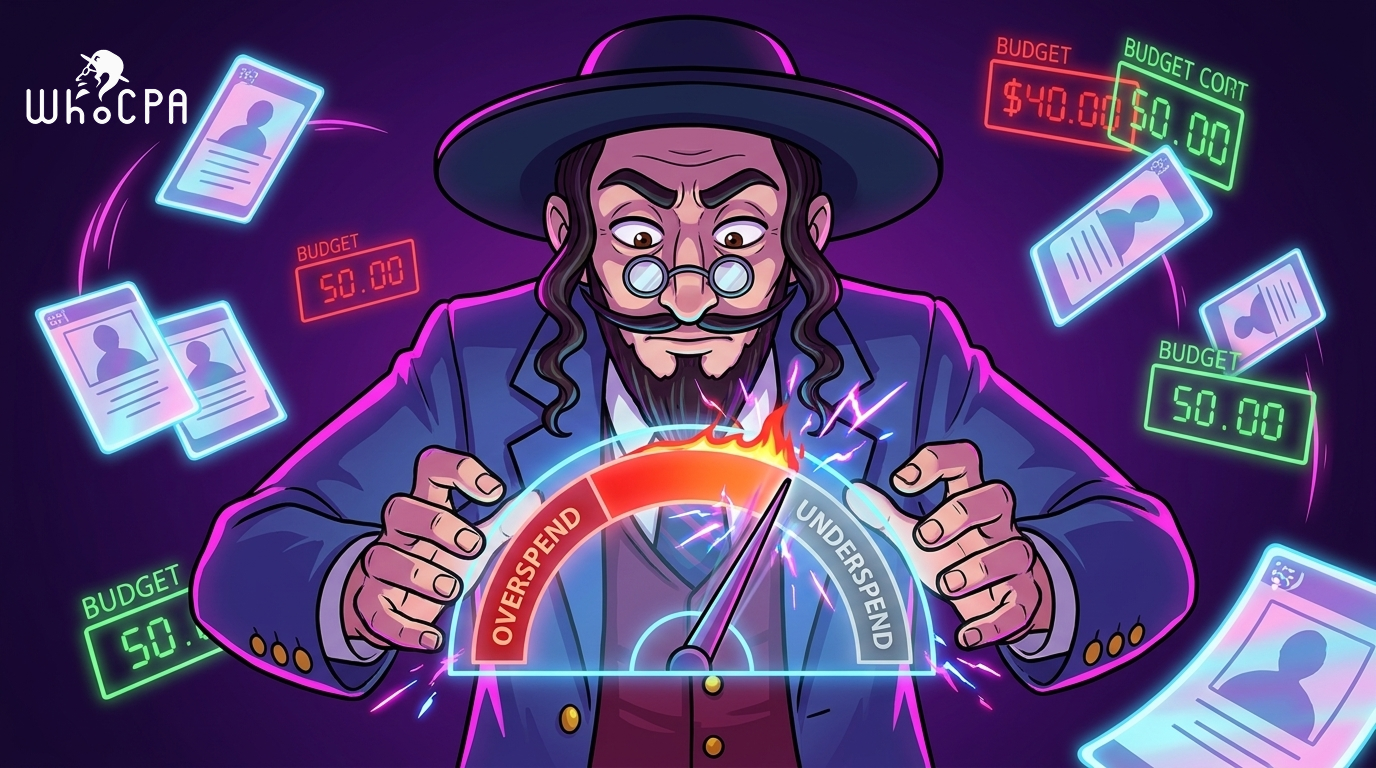
A separate category of problems - overspend (the account spends more than the daily budget) and underspend (the campaign can't spend the allocated budget). Both symptoms often point not to a creative problem, but to a Meta ad account trust problem.
Action plan for overspend or underspend:
- Turn off Advantage+ Creative - it's often the culprit behind strange budget behavior
- Add a space to the headline or ad text - a trick that sometimes helps reset the internal cache
- Duplicate the campaign with identical settings
- If that doesn't help - create a new campaign from scratch in the same account
- If that doesn't help either - switch accounts or use an account with a different time zone
What to do if your Meta ad account trust is already destroyed
If the account is already in the red zone - rejects flooding in, BM bans, video selfie checks - restoring the Meta ad account trust on the same profile is practically impossible. The simpler and more effective path:
- Move to a new account with a clean history and proper warm-up
- Use a different device or antidetect profile
- Switch IP pools - if you burned on server-based, move to mobile
- Rethink the entire chain: not just the creative, but the landing page, domain, and payment method
- On the new account, spend the first 2-3 weeks running only white campaigns to build history and grow trust

Conclusion
In 2026, Meta evaluates the advertiser, not the ad. The Meta ad account trust score determines whether a creative passes moderation, whether a campaign gets proper reach, and whether there will be overspend and random rejects.
That means investing in farm quality, device stability, proper proxies, and organic warm-up isn't "optional hygiene" - it's a direct impact on ROI. The best creative in the world is useless if it's launched from an account Meta doesn't trust.
![Sinoflex [MX] joints Nutra offer in Mexico from WhoCPA](https://st1.whocpa.asia/out/06/29/0629afb20f4a3843379ec20053865b39.png "Sinoflex [MX] — Joints Nutra Offer in Mexico")